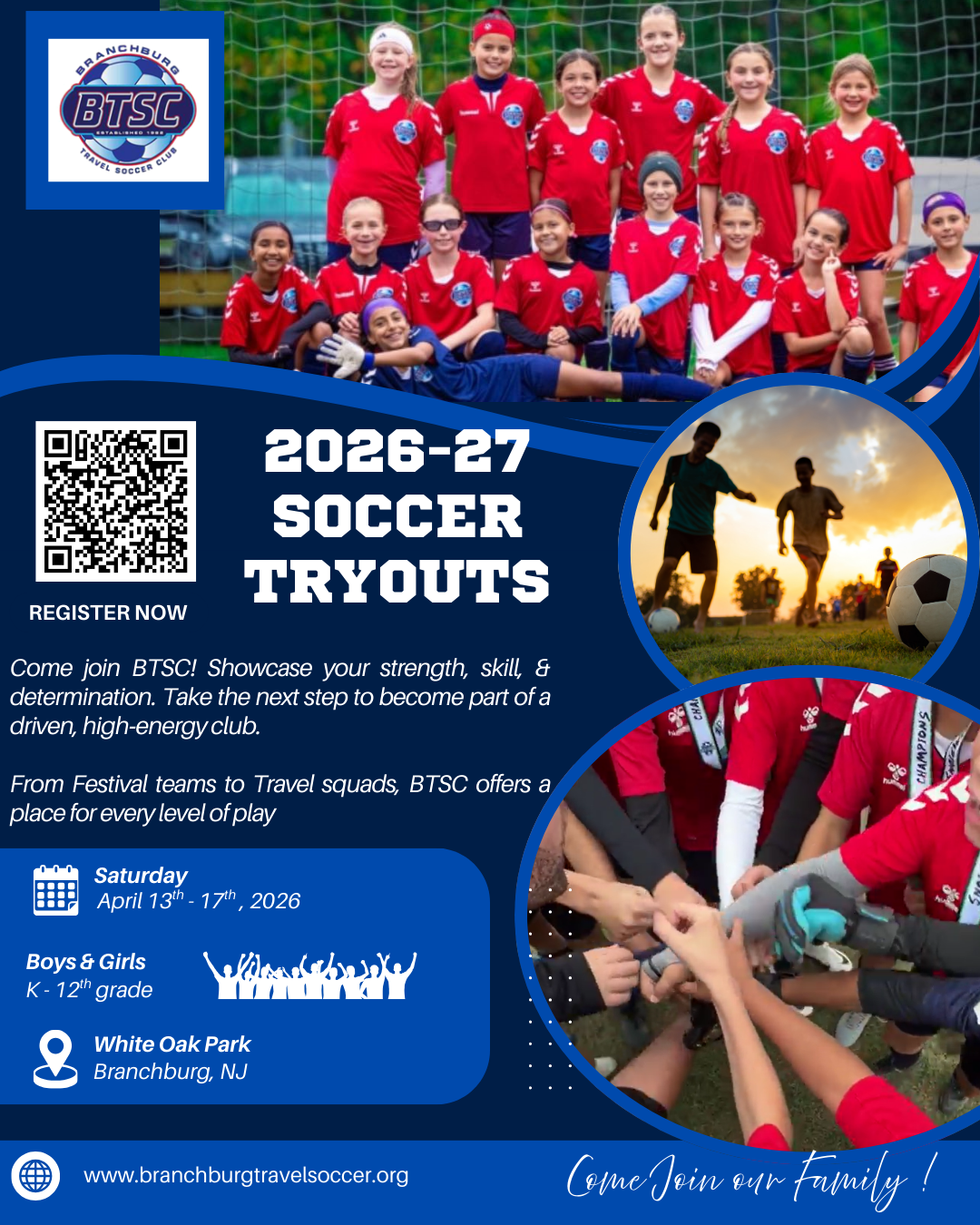
Soccer Tryouts 2026/2027
Registration Link: https://go.teamsnap.com/forms/512433
U.S. Soccer has announced that beginning in Fall 2026, youth teams nationwide will transition from birth-year age groups to grade-based team placement. Players will now be rostered according to the grade they are entering, aligning youth soccer participation more closely with the school calendar.
This change is intended to:
• Better align soccer age groups with school grade levels
• Keep classmates and school peers playing together
• Address challenges faced by “trapped” players during key transitions (middle school to high school and high school to college)
• Support balanced competition and player development
Below is the new age group breakdown for the 2026–2027 season:
U7 — 8/1/2019 – 7/31/2020 (1st Grade)
U8 — 8/1/2018 – 7/31/2019 (2nd Grade)
U9 — 8/1/2017 – 7/31/2018 (3rd Grade)
U10 — 8/1/2016 – 7/31/2017 (4th Grade)
U11 — 8/1/2015 – 7/31/2016 (5th Grade)
U12 — 8/1/2014 – 7/31/2015 (6th Grade)
U13 — 8/1/2013 – 7/31/2014 (7th Grade)
U14 — 8/1/2012 – 7/31/2013 (8th Grade)
U15 — 8/1/2011 – 7/31/2012 (9th Grade)
U16 — 8/1/2010 – 7/31/2011 (10th Grade)
U17 — 8/1/2009 – 7/31/2010 (11th Grade)
U18 — 8/1/2008 – 7/31/2009 (12th Grade)
This rule change will not automatically change your child’s team, and BTSC directors and coaches will work closely together to determine the best placement for each player as we prepare for the 2026–2027 season.
Players born after the July 31 cutoff who attend school in the grade above their birth year may be considered to play with their school cohort, when appropriate.
The club may begin issuing early offers for the 2026–2027 season ahead of open tryouts. Parents must complete registration if they would like their player to be considered for a pre-offer.
We also recognize that changes like this can be challenging. Many players have built strong friendships and meaningful bonds within their current teams, and these relationships — along with individual development and playing ability — will be considered during the team formation process.
At the same time, adaptability is an important part of player development. This shift also creates new opportunities for players to grow, compete confidently, and progress alongside their school peers.